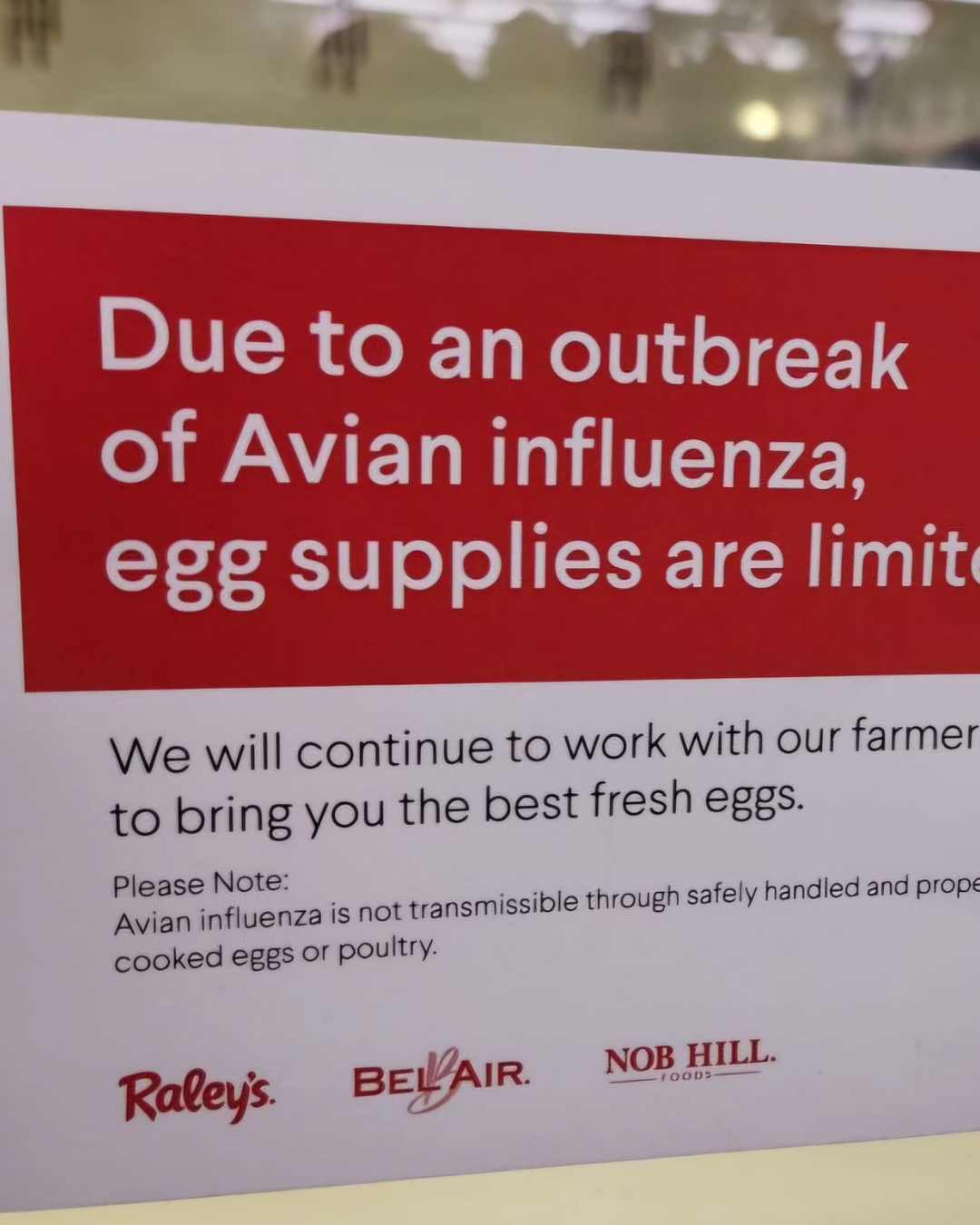
Californians may have noticed empty shelves in the egg aisle or felt the sting of rising prices for a dozen eggs. Behind this shortage is a devastating outbreak of H5N1, or avian influenza, that has swept through the state’s egg farms, killing millions of birds and highlighting systemic issues in industrial farming.
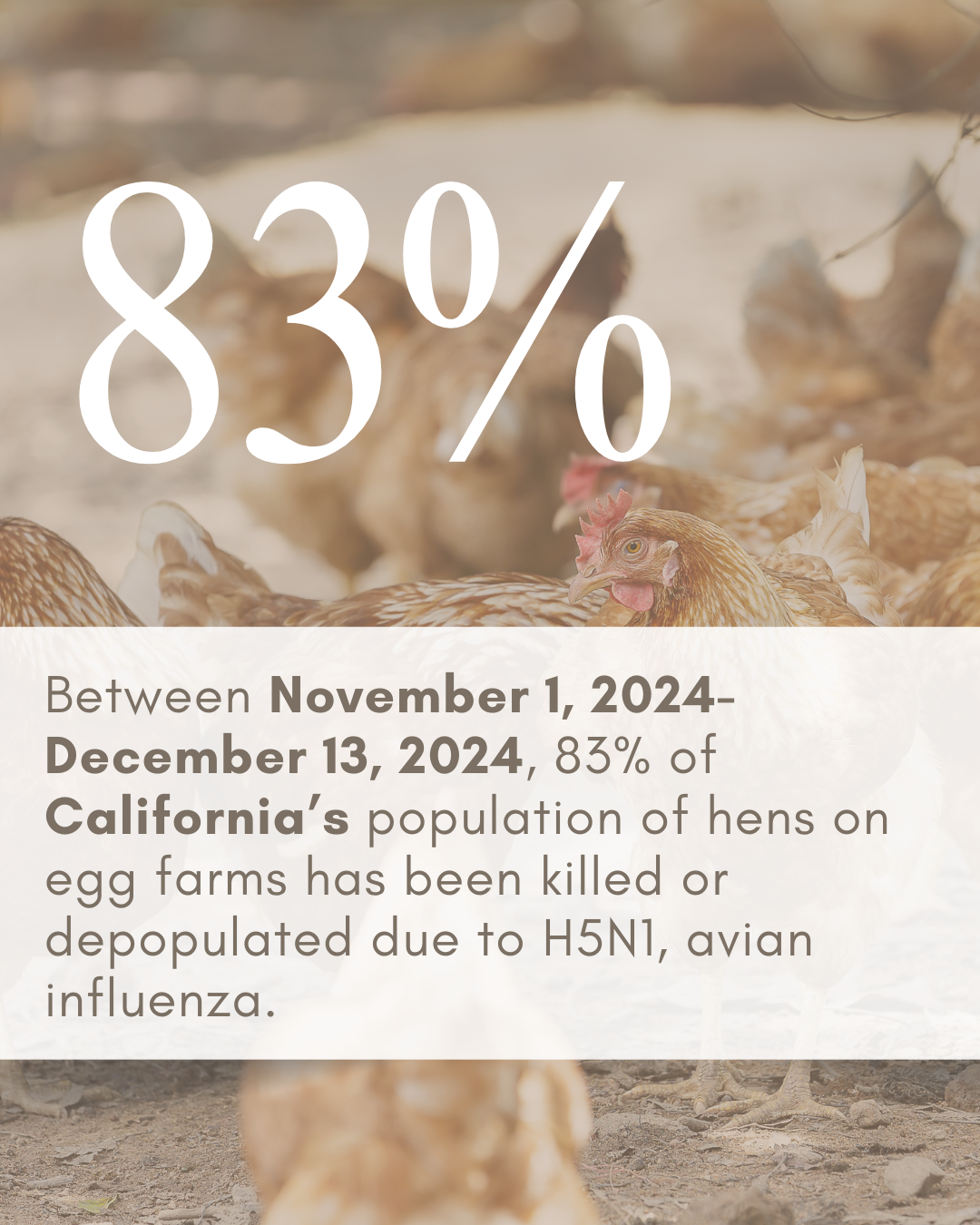
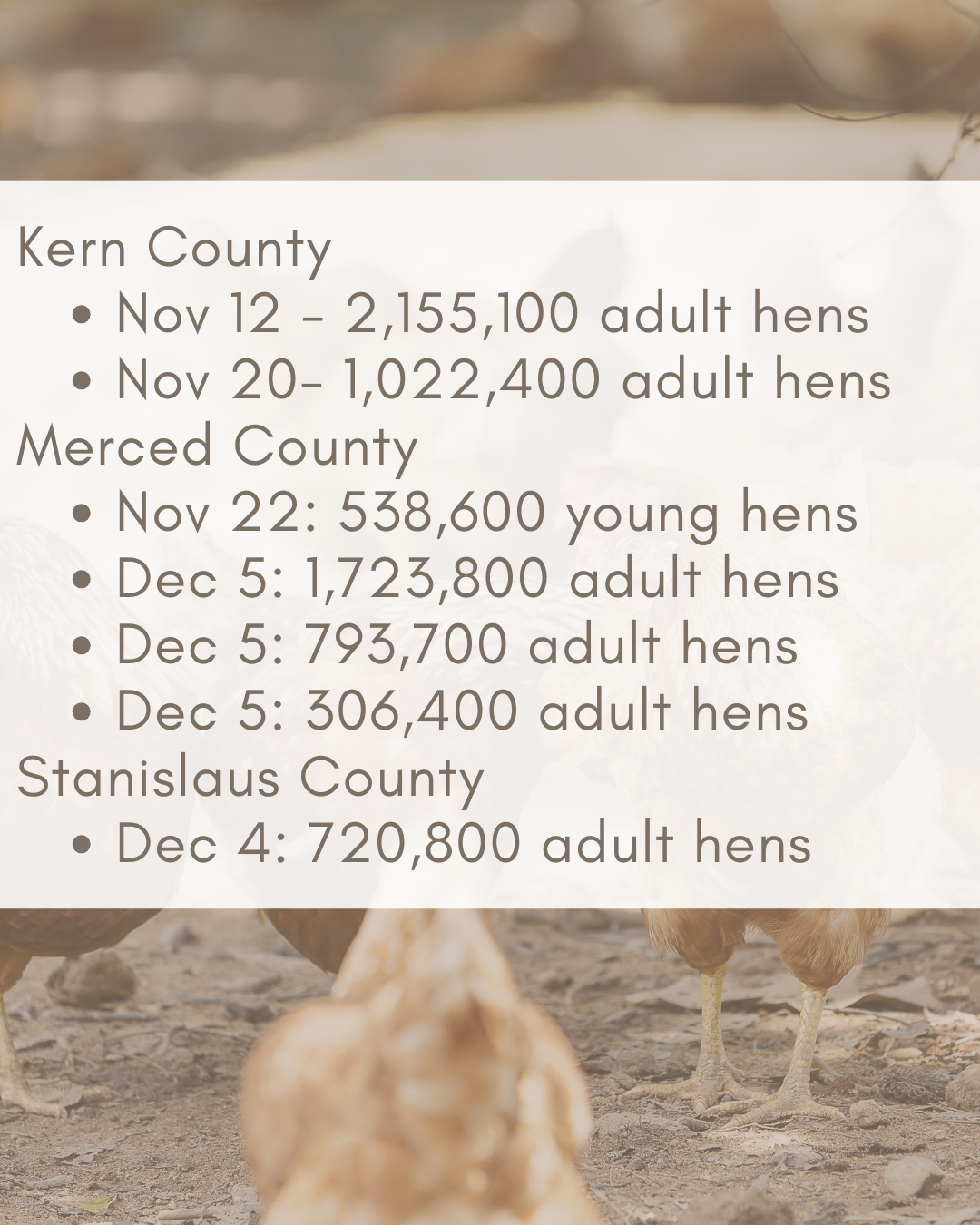
In the past six weeks alone, 83% of hens in California egg farms have been killed or culled due to avian influenza. The state’s egg-laying hen population has plummeted from 14 million in 2022 to just over 8.8 million at the start of this year. This isn’t an isolated issue. Avian influenza has ravaged bird populations across the United States since 2022, yet large industrial farms continue to operate without significant changes to reduce or prevent outbreaks.
Government Bailouts for Big Ag
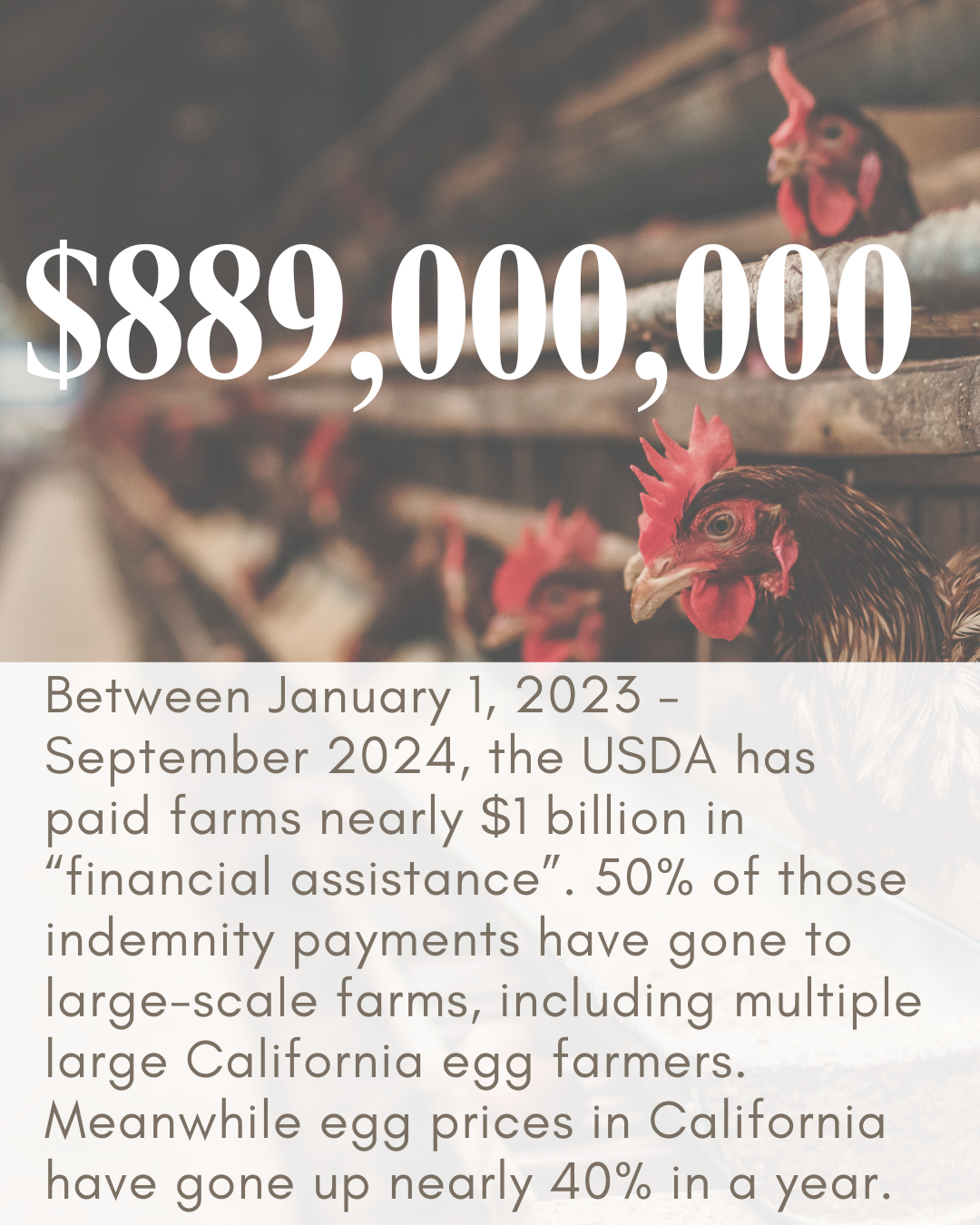
Instead of implementing meaningful reforms, industrial farms rely on financial safety nets from the USDA. Between 2023 and September 2024, the USDA provided $889 million in “financial assistance” to farms impacted by avian influenza. Shockingly, half of these payouts went to large corporate operations, many of which have been repeat offenders, facing bird flu outbreaks year after year. This system leaves little incentive for farms to adopt measures that could prevent the spread of this deadly virus.
The Hidden Cruelty of Egg Farming
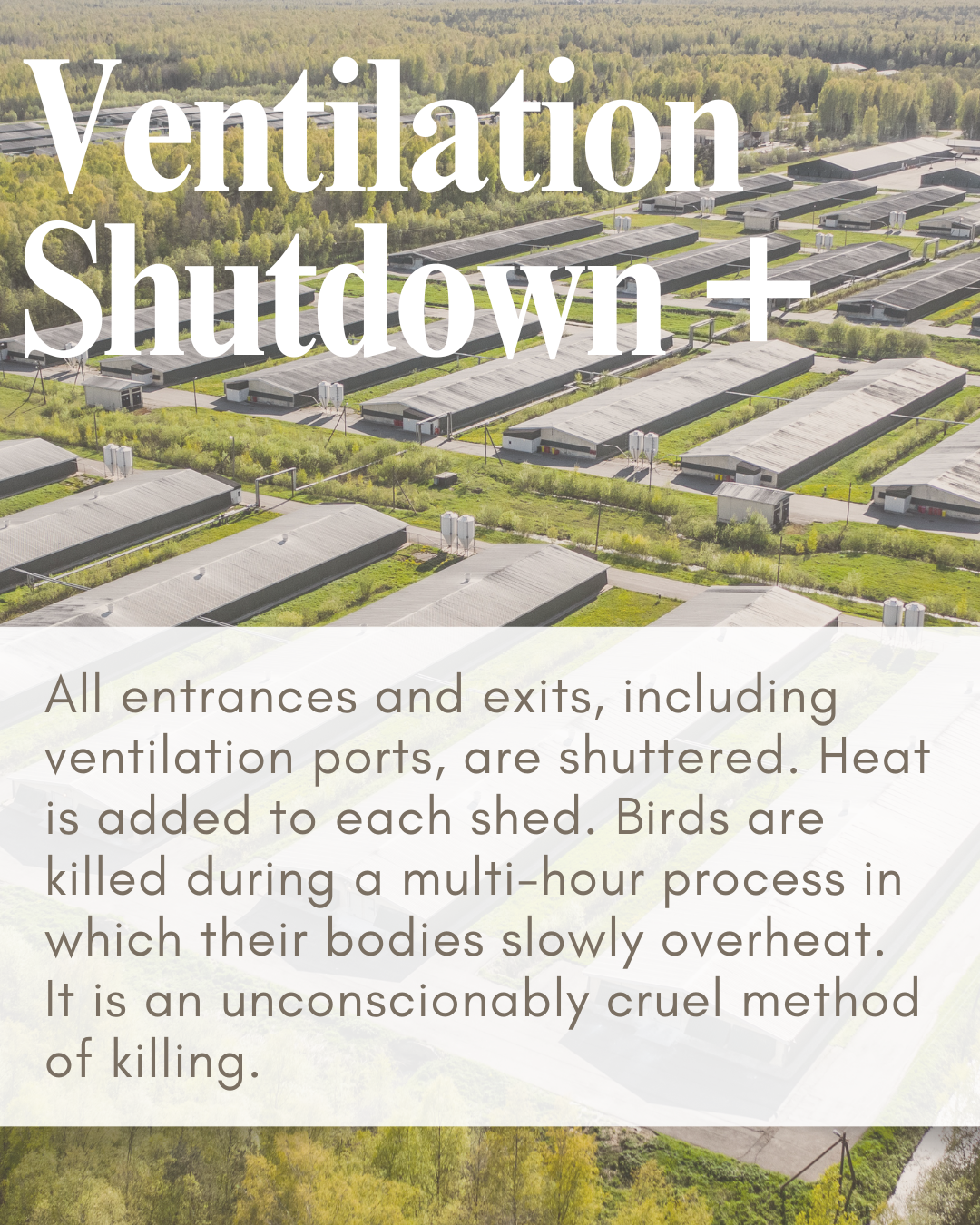
The toll of avian influenza isn’t limited to rising prices and government bailouts—it’s the animals who suffer the most. On commercial egg farms, the standard method for culling infected flocks is Ventilation Shutdown Plus (VSD+), a cruel practice where birds are confined in sealed sheds and subjected to extreme heat, causing a slow and agonizing death. This method, banned in many parts of the world, remains common in the U.S., further underscoring the industry’s disregard for animal welfare.
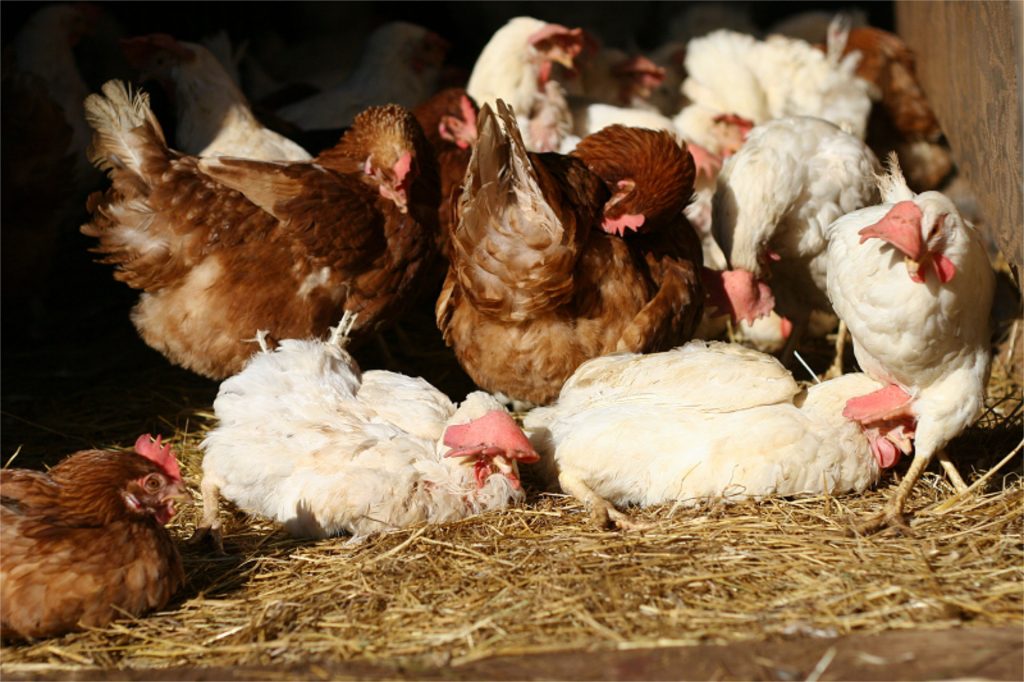
Even outside of outbreaks, life on an egg farm is grim. Hens endure overcrowding, poor living conditions, and lack of legal protections. When avian influenza strikes, their suffering intensifies, and the system that perpetuates this cruelty remains unchallenged.
How You Can Make a Difference
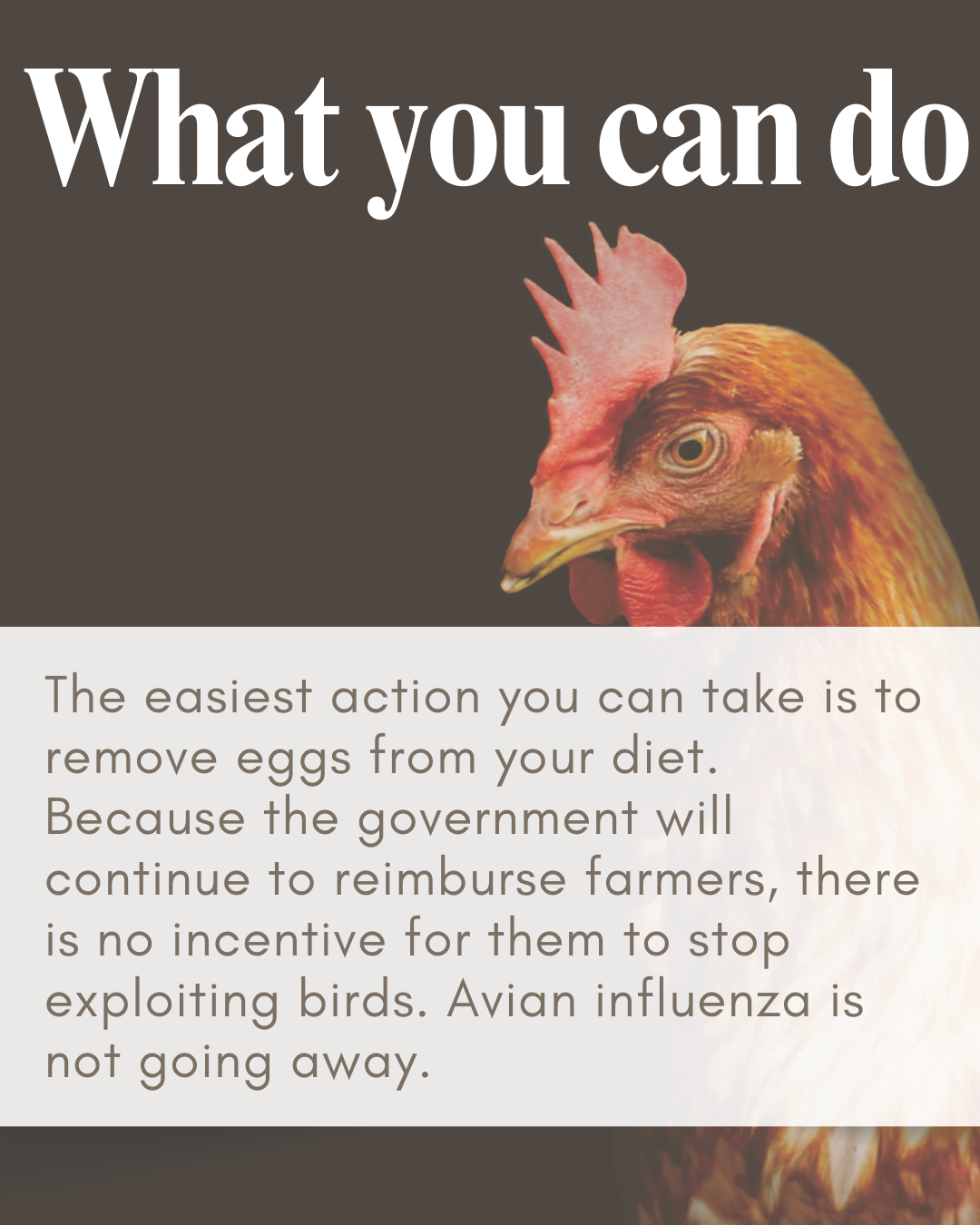
While it may feel like individual choices are powerless against large industrial systems, consumer behavior can drive change. The egg industry continues these practices because the government subsidizes losses, and consumers keep buying. Opting out of this system entirely by choosing not to purchase eggs is a powerful way to push back against cruelty and waste.
Fortunately, we don’t need eggs to thrive. The next time you’re at the grocery store, consider skipping the egg aisle and exploring plant-based alternatives. Each small choice contributes to a larger shift toward a more compassionate and sustainable food system.
Sources: USDA Chickens and Eggs November 2024 Report; USDA APHIS Avian Influenza Data.
Keep an eye on the 2024 cases by viewing the map below.